Your coffee was roasted weeks before you opened the bag. Freshness fades fast, and with single-origin African beans the difference shows up in your first sip: the blackcurrant, the jasmine, the sweetness. Roast-to-order changes that clock.
By the end of this guide, you will know how Ethiopia, Kenya, Tanzania and Uganda each taste in the cup, which Kochere Coffee single origins to try first, and how to choose between them for your brew method and budget.
What Is Kochere Coffee? A Roast-to-Order Specialty Roaster
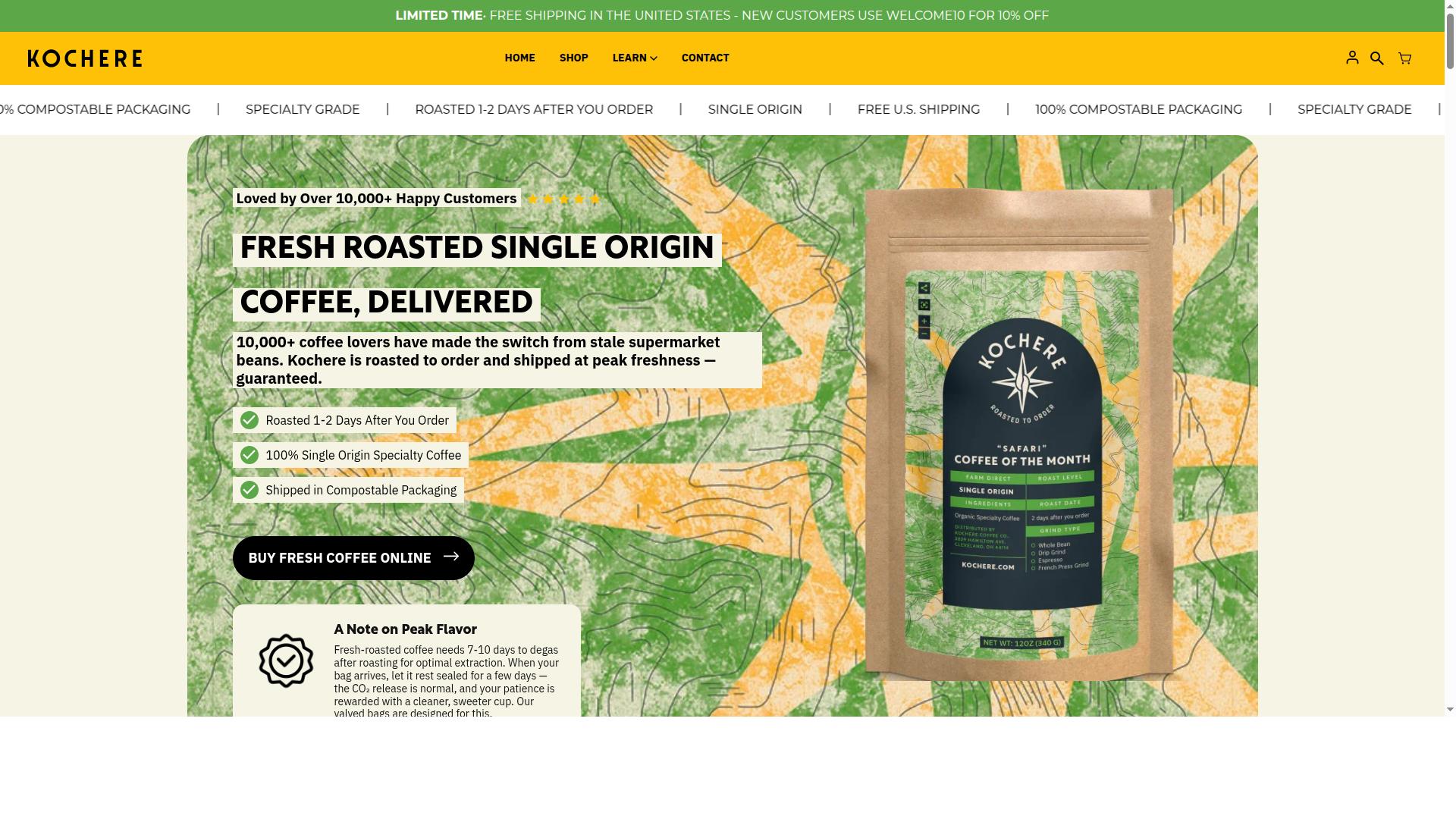
Kochere Coffee is a specialty roaster that roasts every bag only after you order it, so your coffee ships the same day it's roasted. That single choice shapes everything else about the company. Nothing sits on a shelf, and no bag waits in a warehouse for months before it reaches your kitchen.
The name comes from the Kochere district in Ethiopia's Gedeo zone, one of the world's celebrated coffee-growing areas. It's a fitting tribute for a roaster that works farm direct with smallholder cooperatives across eight growing regions in Africa and the Americas: Ethiopia, Kenya, Tanzania, Uganda, Colombia, Brazil, Costa Rica and Honduras.
If you're reading this guide because you love African coffee beans, Kochere is a natural place to start. The company focuses on single-origin, specialty-grade Arabica, scored 80 or higher on the SCA scale by certified Q Graders. Every lot is hand-selected and cupped before it earns a spot on the menu.
Here's what the roast-to-order model means in practice:
- Small-batch roasting after you order, then same-day shipping off the roaster
- Farm-direct sourcing from cooperatives, with no middlemen in between
- Your choice of bag size and grind: whole bean, drip, coarse or fine
- 100% compostable packaging, so the bag breaks down after the coffee is gone
Freshness is the point. Coffee is at its most expressive in the days and weeks after roasting, when the aromatics are still lively. A bag roasted the morning it ships gives you a fuller, sweeter cup from your very first brew.
You'll notice it the moment the bag opens. The aroma rises before you even reach for a scoop, and that first whiff tells you plenty about what's coming in the cup.
For anyone exploring East Africa, Kochere's lineup speaks the language of this guide. You can follow the floral, citrus-bright character of Ethiopia through to the deep berry notes of Kenya and the rounded sweetness of Tanzania and Uganda. Each one is a single origin, so the cup tells you something specific about where it grew.
The Kochere team also backs each order with the Perfect Cup Guarantee: if you're not happy within 30 days, you get a replacement or a full refund, and there's no return shipping to worry about.
Why African Coffee Beans? The Birthplace of Arabica
Africa is where Coffea arabica first grew wild, and today the continent's highlands produce some of the most distinctive coffees on earth. Long before coffee was planted anywhere else, its ancestors shaded the forests of East Africa.
That heritage runs through the coffee belt, the band of tropical highlands circling the globe where coffee thrives. East Africa sits at its heart, with elevations that push the fruit to ripen slowly and concentrate flavor.
When you open a bag of African coffee beans, you are tasting a lineage that stretches back centuries. The sections below explore what makes the region's coffees so recognizable in the cup.
What Makes East African Coffee Distinct
East African coffees stand out for their high-altitude terroir, heirloom varietals, and bright, complex flavors that reflect the region's rich soil and climate. Most farms sit between 1,500 and 2,000 meters, sometimes higher, where cool nights slow cherry development.
That slow ripening builds density in the bean and layers of flavor in the cup. Fertile volcanic soils add another dimension, feeding the plant minerals that show up as depth and clarity.
Altitude and soil alone do not tell the whole story. The varietals matter just as much, and East Africa holds an unusual range of them.
- Heirloom varieties in Ethiopia, many still growing wild in forest shade
- SL28 and SL34 in Kenya, known for deep blackcurrant and citrus
- Bourbon and Typica, old cultivars found across the region
- Ruiru 11 and Batian, newer Kenyan varieties bred for resilience
- Kent in Tanzania and Nyasaland in Uganda and Malawi
Put these together and you get a recognizable cup profile. Expect bright acidity, a juicy body, and fruit that leans toward blackcurrant, grapefruit, and stone fruit.
Floral aromas often rise from the grounds before you even brew. In Ethiopia's Yirgacheffe and Guji, jasmine and bergamot are common. Kenya's Nyeri and Kirinyaga bring a sharper, wine-like snap.
You can taste the difference most clearly in single-origin coffee, where one lot carries its own story. A washed Ethiopian Sidamo and a Kenyan Nyeri & Embu side by side show how far the region's range stretches.
Roast matters too. A light to medium roast keeps those delicate fruit and floral notes intact, while a darker profile can bury them under roast flavor.
That is why roast-to-order freshness counts for so much with these coffees. The aromatics fade quickly after roasting, and a bag opened soon after the roast date tells you what the farm really tastes like.
Small choices on the farm, from cherry sorting to drying beds, shape what lands in your cup. East African producers have refined these steps over generations, and the care shows in the clarity of the final brew.
Ethiopia: The Genetic Heartland of Coffee
Ethiopia is the birthplace of coffee, home to thousands of wild heirloom varieties and legendary regions like Yirgacheffe, Sidamo, and Harrar. Walk through a forest there and you may pass coffee trees growing untamed, each one a slightly different plant.
That wild diversity is why Ethiopia sits at the center of the coffee belt. Regions such as Guji, Limu, and Jimma each carry their own soil, altitude, and rainfall, so the same species can taste wildly different from one valley to the next.
For drinkers, this means Ethiopian coffee is rarely boring. One lot may glow with citrus and jasmine, another with deep berry and cocoa. The heirloom varieties behind those flavors exist almost nowhere else on earth.
Harrar and Sidamo - Kochere Coffee's Ethiopian Single Origins
Kochere Coffee offers two standout Ethiopian single origins: Harrar and Sidamo, each with its own distinct flavor profile. Both are natural process coffees, dried in the whole fruit, which layers sweetness and fruit into every bean.
Ethiopian Harrar is a medium roast built from heirloom cultivars grown in Oromia. Open the bag and the first thing you notice is wild fruit, close to dried berries. In the cup you get berry, honey, chocolate, and a lingering wild fruit note that keeps shifting as it cools.
Ethiopian Sidamo comes from heirloom cultivars in the Sidama Zone, roasted medium-light. Expect milk chocolate and caramel up front, with fruit weaving through the finish. It is the softer, rounder sibling of the two, easy to love on the first sip.
One customer described the Harrar this way: "A wonderful complex flavor with some light hints of acidity and fruit, but is very balanced... an excellent Ethiopian coffee."
Both coffees are single-origin and roasted to order, so the bag reaches you close to its roast date rather than sitting on a shelf. They come in 12 oz, 1 lb, 2 lb, and 5 lb bags, as whole bean or ground for drip, coarse, or fine brewing.
If you are new to natural Ethiopian coffee, start with Sidamo for its gentle sweetness, then move to Harrar when you want more fruit and complexity. Together they show just how wide the range of African coffee beans from one country can be.
Kenya: Bright Acidity and Blackcurrant Intensity
Kenyan coffees are famous for their vibrant acidity and intense blackcurrant notes, driven by high altitudes and prized varietals like SL28 and SL34. Open a fresh bag of Kenyan beans and the aroma alone hints at what's coming: dark fruit, a little citrus peel, something almost wine-like. This is East African coffee at its most vivid.
Most Kenyan lots are Coffea arabica grown on small farms and estate plots across the central highlands, often between 1,500 and 2,000 meters. Cool nights and warm days slow the cherry's ripening, concentrating sugars and acids in the bean. That slow ripening is a big part of why high-altitude cultivation shows up so clearly in the cup.
Kenya sits squarely in the coffee belt, and its terroir does the rest. Volcanic soil, steady rainfall, and careful wet processing give these beans a structure that holds up beautifully in a light or medium roast. Roasted to order, that structure stays intact instead of fading on a shelf.
The main growing regions each bring a slightly different personality to your cup:
- Nyeri: often the benchmark for intensity, with blackcurrant and deep sweetness
- Kirinyaga: juicy and clean, with bright citrus and berry notes
- Murang'a: rounded fruit and a syrupy body
- Embu: lively acidity with a tart, grape-like finish
- Meru: balanced and sweet, with softer fruit tones
The varietals behind these flavors matter just as much as the place. SL28 is the classic source of blackcurrant and tangy acidity, while SL34 adds body and a smoother, rounder feel. Both were selected in Kenya decades ago and remain the backbone of its most distinctive lots.
You'll also see Ruiru 11 and Batian in Kenyan lots. These newer varietals were bred with disease resistance in mind, and they can bring clean, balanced sweetness to a blend or a single-origin coffee. They don't replace SL28 and SL34 in flavor reputation, but they help keep Kenyan coffee growing steadily.
Kent and Bourbon also appear in older plantings, and Typica shows up in smaller amounts. The result, across all these coffee varietals, is a range from sharp and fruit-forward to soft and sweet, all under the same bright Kenyan umbrella.
When you brew a Kenyan lot, expect the first sip to feel juicy rather than heavy. Blackcurrant tends to lead, followed by citrus, sometimes grapefruit or blood orange, and a clean, tea-like finish. As the cup cools, the fruit gets louder and the sweetness rounds out.
Kochere Coffee's Kenyan Nyeri & Embu brings two of these regions together in one roast. Nyeri supplies the intensity, Embu adds lift and a tart edge, and the combination lands right in the heart of what makes Kenyan single-origin coffee so memorable.
Because the beans are roasted to order, those fruit acids reach you at their peak rather than muted by time in a warehouse. Grind just before brewing, use water just off the boil, and let the cup cool a little before you judge it. The blackcurrant shows up best when the coffee isn't scalding.
Tanzania: Balance and Sweetness from the Southern Highlands
Tanzania's southern highlands, including Kilimanjaro, Mbeya, and Arusha, produce coffees known for their balance and sweetness. This is East Africa at its most approachable: bright enough to wake up your palate, soft enough to drink all morning.
Most of the crop is Coffea arabica, grown on small farms and estates at high altitude, where cool nights let the cherries ripen slowly and build sugar. Bourbon and Kent are the classic coffee varietals here, and both tend to deliver a round body with a clean, sweet finish.
Tanzania is also famous for peaberry, a natural quirk where a single round seed forms inside the cherry instead of two flat ones. Pickers sort these out by hand, and roasters prize them for an even roast and a tidy, focused cup. If you enjoy a single-origin coffee that leans sweet rather than sharp, Tanzania is a smart place to start.
Kochere Coffee's Tanzanian Offering
Kochere Coffee's Tanzanian Peaberry is a single-origin coffee that highlights the region's signature balance and sweetness. It comes from Mbeya, is washed, and is roasted to a medium-light level that keeps the fruit front and center.
The lot is built on Bourbon and Kent, two varieties that suit this part of the country well. Expect pear, jasmine, and strawberry: a soft floral lift at the front, ripe fruit through the middle, and a clean, sweet close.
Open the bag and the jasmine arrives first, light and perfumed, with a hint of fresh pear behind it. Your first sip brings the strawberry forward, then settles into a gentle finish that lingers without turning heavy. It is a cup that tastes bright in the morning and still feels calm after lunch.
Because every Kochere coffee is roasted to order, your beans are roasted after you buy them, not weeks before. That timing matters with a delicate washed peaberry, where the floral notes fade fastest. Grind just before brewing and those jasmine aromatics stay in the cup where they belong.
The Tanzanian Peaberry is available in 12 oz, 1 lb, 2 lb, and 5 lb bags, as whole bean or in drip, coarse, or fine grind. If you like a little structure with your sweetness, it also appears alongside Ethiopian and Kenyan coffees in the Horn of Africa Reserve espresso blend, where it adds balance to the darker chocolate and spice notes.
Uganda: Africa's Quiet Volume Leader
Uganda is Africa's largest coffee exporter by volume, producing both Robusta and Arabica, with a growing reputation for specialty Arabica. If you have sipped coffee from this part of East Africa, you have already met one of the continent's most important origins. Uganda ships more coffee than any other African country, and that steady output has made it a backbone of the global trade.
Much of that volume is Robusta, a hardy plant that thrives at lower elevations and gives coffee a bold, earthy character. Yet the story most coffee lovers are now following is Uganda's Arabica. Specialty Arabica from Uganda is gaining attention for its range and quality, and each harvest brings more of it to the wider coffee belt.
The Arabica side of Uganda has two clear homes. On the slopes of Mount Elgon in the east, high-altitude cultivation gives cherries a slow, even ripening. In the west, the Rwenzori Mountains rise dramatically from the surrounding plains, and their cool air and rich soils shape a different cup entirely.
Both regions sit well above sea level, which is a big part of why the coffee tastes the way it does. Cooler nights and slower development concentrate sugars in the fruit. In your cup, that often shows up as a gentle sweetness with stone fruit or soft citrus, a rounded body, and a clean finish.
Ugandan producers grow a mix of Bourbon, Typica and Kent alongside other local selections. That variety, combined with the country's terroir, gives roasters real material to work with. You will find washed lots that taste crisp and bright, and natural lots that lean toward berry and cocoa.
When the bag opens, expect a warm, inviting aroma that hints at what is coming in the brew. Roast-to-order freshness matters here, because a gentle Ugandan Arabica rewards a careful roast that lets the origin speak. The Kochere team treats Ugandan Sipi Falls as an organic lot, and it is one of only two organic coffees on the menu, which says a lot about how the origin is handled.
Uganda is not a newcomer to coffee. It is a country with deep growing traditions and a long history of farming the crop. What is newer is the attention specialty buyers are paying to single-origin coffee from its highlands, and the care that goes into sorting, processing and drying.
If you are exploring African coffee beans, Uganda belongs on your list next to Ethiopia, Kenya and Tanzania. It offers a different voice: rounder and softer than a bright Kenyan, earthier at times than a floral Ethiopian. Your first sip of a Ugandan Arabica may surprise you with how calm and sweet it is.
For anyone who wants to taste the origin for themselves, a washed Ugandan lot is a fine place to start. Brew it a little cooler, let the sweetness come forward, and notice how the cup changes as it cools. That is the quiet confidence of Ugandan coffee, and it is worth your time.
How Kochere Coffee Sources and Roasts African Beans
Kochere Coffee sources specialty-grade African beans and roasts them to order, ensuring every bag arrives fresh. The path from a washing station in Ethiopia or a hillside farm in Kenya to your kitchen follows a clear set of steps.
First, the Kochere team selects high-quality lots from the regions covered in this guide: Ethiopia, Kenya, Tanzania and Uganda. Each lot is then cupped and scored before it earns a place in the lineup. Only after that approval does it become a candidate for roasting.
Roasting itself waits until you place an order. That single decision, holding the green coffee until it is needed, is what separates a vivid cup from a flat one. The aroma when the bag opens tells you the difference right away.
This approach matters most with African coffee beans, where delicate florals and bright fruit notes fade fastest after roasting. Treating each lot as an individual, rather than a blend component, keeps those characteristics intact. It also means your Ethiopian Yirgacheffe or Kenyan Nyeri tastes like the place it came from, not like a shelf.
Cupping, Scoring and Roasted-to-Order Freshness
Every lot at Kochere Coffee is cupped and scored by certified Q Graders using the SCA protocol, and only lots scoring 80+ make the lineup. That threshold defines specialty grade, which the brand describes as the top 3% of the world's coffee.
Cupping is the industry's standard tasting method. Graders smell the wet grounds, then slurp each cup to spread the coffee evenly across the palate. They note sweetness, acidity, body, flavor and aftertaste, plus any defects.
Scoring turns those impressions into a number. A lot that falls short of 80 is set aside, no matter how good its story sounds. The lots that pass carry the bright, layered character you expect from high-altitude cultivation in East Africa.
Then comes the part you actually taste. Roasting happens only after an order is placed, and coffee ships the same day it is roasted. Green coffee keeps for months; roasted coffee begins losing its peak within days. Holding the roast until your order arrives means the beans reach you near their liveliest.
You will notice it in small ways. The crema on an espresso, the bloom when hot water hits fresh grounds, the fruit notes that stay clear instead of turning dull. Those are signs of a short gap between the roaster and your kitchen.
Flavor Comparison: Ethiopia vs. Kenya vs. Tanzania vs. Uganda
Ethiopia offers floral and fruity notes, Kenya brings bright acidity and blackcurrant, Tanzania delivers balance and sweetness, and Uganda provides a milder, approachable cup. Put four cups side by side and the differences are easy to taste, even if you are new to African coffee beans.
All four countries grow Coffea arabica at high altitude along the coffee belt, and most of what you taste comes from terroir: soil, elevation, rainfall and the varieties farmers plant. Here is how each origin tends to show up in the cup.
| Country | Key Flavor Notes | Mouthfeel |
|---|---|---|
| Ethiopia | Jasmine and bergamot, stone fruit, citrus | Tea-like, silky, light body |
| Kenya | Blackcurrant, grapefruit, tomato-leaf savoriness | Juicy, syrupy, full body |
| Tanzania | Red apple, caramel, soft berry | Round, creamy, medium body |
| Uganda | Cocoa, toasted nut, gentle citrus | Smooth, mellow, medium-light body |
Ethiopia is the birthplace of coffee, and its Heirloom varieties carry that history in the cup. A washed lot from Yirgacheffe or Guji often opens with jasmine and bergamot, while natural Harrar lots lean toward blueberry and dark fruit. The mouthfeel is tea-like and light, so the aromatics do the talking. Kochere's Ethiopian Harrar is a fine way to meet this profile, and the Ethiopian Sidamo shows the softer, fruit-forward side of the south.
Kenya is where brightness takes center stage. Varietals like SL28 and SL34 give Kenyan lots their signature blackcurrant and grapefruit snap, often with a savory tomato-leaf edge. The body is fuller and juicier than most Ethiopian cups. Kochere's Kenyan Nyeri & Embu brings together two growing regions, so you get that juicy acidity with a rounded finish.
Tanzania sits somewhere between its neighbors, with balance as its strength. Expect red apple, caramel and a soft berry note, carried by a round, creamy body. Tanzanian Peaberry is a good example: the small, round peaberry beans tend to roast evenly and land sweet and clean in the cup. It is an easy pick if you like a gentle, comforting brew.
Uganda rounds out the group with a milder, approachable cup. You will often find cocoa and toasted nut up front, with just a hint of citrus behind it, and a smooth, mellow body. Uganda grows both Arabica and Robusta, but the high-grown Arabica lots are the ones worth seeking out for specialty coffee. Kochere's Ugandan Sipi Falls is one of the organic lots and a friendly entry point for anyone easing into East African coffee.
As you compare, keep roast-to-order freshness in mind. Aromatics fade fast after roasting, so the floral notes in an Ethiopian cup and the blackcurrant in a Kenyan one show up most clearly when the beans are fresh. Buy in small amounts, grind just before brewing, and taste each origin on its own before you start blending. That is how the differences become clear.
Pricing, Bag Sizes and the Single Origin Sampler
Kochere Coffee offers flexible bag sizes from 12 oz to 5 lb, with most single origins priced at $27.49 for a 12 oz bag. That range matters when you are exploring African coffee beans, because you can try a small bag of Ethiopian Harrar before committing to a larger one.
Every bag is roasted to order, so the aroma that greets you when you open it is the point of the whole thing. Pricing stays clear and predictable, with no mystery fees added at the end.
| Bag Size | Price Range |
|---|---|
| 12 oz | $26.99 to $27.99 (most single origins $27.49) |
| 1 lb | $33.99 to $35.99 |
| 2 lb | $59.99 to $62.99 |
| 5 lb | $99.99 |
A few examples from the African lineup: Tanzanian Mbeya AB and Ugandan Sipi Falls sit at $27.49 for 12 oz, while Kenyan Nyeri Embu AB is $27.99. The Horn of Africa Reserve Signature Espresso Blend comes in at $26.99. All prices are shown in USD.
If you want to compare origins side by side, the Single Origin Coffee Sampler is $29.99. It is a low-pressure way to taste how high-altitude cultivation and terroir shift the cup from one country to the next.
For a steady supply, the Safari Coffee of the Month Club is $27.49 and saves up to 15% compared to one-time purchases. The discount depends on how often you choose delivery, and every two weeks earns the full 15%. You can skip or cancel anytime.
Subscriptions stay flexible by design. On a product page like Ethiopian Harrar, Subscribe & Save shows 10% off at $24.74, with delivery every two, three, or four weeks, and you can modify or cancel whenever you like.
New customers can use code WELCOME10 for 10% off a first order. Shipping is free in the United States, while Alaska, Hawaii and international orders pay shipping.
Every order also carries the Perfect Cup Guarantee. If you are not completely satisfied, contact the Kochere team within 30 days for a replacement or a full refund, with no return shipping required and no questions asked.
Who Should Buy African Coffee from Kochere Coffee
Kochere Coffee is ideal for home coffee lovers who value freshness, origin, and specialty-grade single-origin beans. If you brew pour over, French press, drip, or espresso at home and you are tired of stale supermarket beans, this roaster was built with you in mind.
The core difference is roast-to-order freshness. Your bag is roasted after you order, so the aroma that greets you when you open it is the aroma of coffee roasted days ago, not months. That single choice changes what you taste in the cup.
You do not need to be a seasoned connoisseur to enjoy these coffees. The range welcomes people just starting their single-origin journey as well as longtime home brewers, and every bag comes with a clear origin story you can follow from farm to cup.
Here is who tends to get the most from a Kochere order:
- Curious explorers who want to travel the coffee belt one bag at a time, starting with Ethiopia, Kenya, Tanzania, and Uganda.
- Home brewers chasing clarity in a pour over or body in a French press, and espresso drinkers who want a single origin they can dial in.
- Gift buyers looking for a thoughtful present for a coffee lover, with beans that arrive fresh rather than dusty on a shelf.
- Anyone tired of stale bags who wants to taste what high-altitude cultivation and careful processing actually do to a bean.
If you love comparing a washed Ethiopian Yirgacheffe against a Kenyan Nyeri, or a Tanzanian Peaberry against a Ugandan Sipi Falls, this is your kind of roaster. Each lot lets you taste terroir, altitude, and coffee varietals side by side, which is the real pleasure of single-origin coffee.
And if a bag is not to your taste, the Perfect Cup Guarantee covers you. Not happy within 30 days, and you get a replacement or a full refund, with no return shipping. That makes trying a new origin feel easy rather than risky.
Final Verdict: Is Kochere Coffee Worth It for African Beans?
If you want fresh, specialty-grade African coffee delivered to your door, Kochere Coffee is a compelling choice. The roaster builds its whole model around roasting to order, so your beans are roasted close to the moment they ship rather than sitting in a warehouse. Open the bag and the aroma tells you the difference right away.
That freshness matters most with African coffee beans. The floral lift of Ethiopian Yirgacheffe, the bright blackcurrant snap of Kenyan Nyeri, the soft stone-fruit sweetness of a Tanzanian Peaberry: these are delicate qualities that fade with time. Roast-to-order means you taste them closer to their peak.
The lineup covers the range this guide has walked through. You can explore Ethiopian Sidamo, Kenyan Nyeri & Embu, Tanzanian Peaberry and Ugandan Sipi Falls, each a single-origin coffee with its own character. The Ugandan Sipi Falls is one of the named organic lots, alongside Honduran Marcala.
Every bean is specialty-grade, scored 80 or above, and sourced directly. That direct relationship with farmers is part of why the origin stories here feel personal rather than decorative. The Kochere team is proud of where these coffees come from, and it shows in the cup.
Practical perks round out the picture. Subscriptions come with savings, and shipping is free. If a bag does not land the way you hoped, the Perfect Cup Guarantee covers you: not happy within 30 days, and you get a replacement or a full refund, with no return shipping to worry about.
So is it worth it? For anyone working through the African coffee belt, from Ethiopia and Kenya to Tanzania and Uganda, yes. You get fresh roasting, specialty-grade beans, direct sourcing and a real guarantee behind every order. That is a strong package for a home brewer chasing origin character.
To learn more, visit kochere.com or email support@kochere.com. You can also follow along on Instagram, TikTok, X, Facebook and Pinterest at @kocherecoffee. Your next fresh bag of African coffee is a click away.
Frequently Asked Questions
What makes Ethiopian, Kenyan, Tanzanian and Ugandan coffees different from one another?
Each origin has its own character: Ethiopia is prized for floral, fruity and berry-forward profiles (Kochere Coffee offers Ethiopian Harrar and Ethiopian Sidamo, both natural process), Kenya for bright acidity and depth, Tanzania for clean, balanced cups such as Tanzanian Peaberry, and Uganda for fuller, sweeter coffees like Ugandan Sipi Falls. The best way to taste the contrast is to brew them side by side and compare.
Are Kochere Coffee's African coffees roasted fresh?
Yes. Kochere Coffee is a roast-to-order roastery: every bag is roasted in a small batch only after you order it, never pulled from warehouse stock, and ships the same day it is roasted so it arrives at peak freshness. Every lot is cupped and scored by certified Q Graders before it joins the lineup.
Which African coffees does Kochere Coffee sell, and what do they cost?
The lineup includes Ethiopian Harrar, Ethiopian Sidamo, Kenyan Nyeri & Embu, Tanzanian Peaberry and Ugandan Sipi Falls. A 12 oz bag runs $26.99-$27.99 (most single origins $27.49), with 1 lb bags at $33.99-$35.99, 2 lb at $59.99-$62.99 and 5 lb at $99.99; a Single Origin Sampler is $29.99 if you'd like to explore several origins at once.
Is Ugandan Sipi Falls organic?
Ugandan Sipi Falls is one of the two organic lots Kochere Coffee carries (the other is Honduran Marcala). Not every coffee in the lineup is organic, so check the individual product page for the lot you're considering.
How should I brew these African coffees?
Their bright, aromatic profiles suit pour over and other filter methods that let delicate fruit and floral notes come through, while medium roasts like Ethiopian Harrar also work well in a French press. If you're deciding between methods, Kochere Coffee's blog covers pour over versus espresso to help you choose.
What if I don't like the coffee, and where does Kochere Coffee ship?
The Perfect Cup Guarantee covers you: if you're not happy within 30 days, you get a replacement or a full refund, with no return shipping. Kochere Coffee ships free across the continental United States, and you can reach the team at support@kochere.com with any questions.